
Vibroacoustic Therapy: What Is It & What Are the Potential Benefits?
If you've been living with chronic pain, pelvic floor dysfunction, muscle tension, or persistent stress, you've probably wondered:
"Why do I still hurt if nothing seems to be wrong?"
Maybe you've had imaging that looked normal. Maybe you've tried stretching, strengthening, injections, massage, or medications. You may have experienced temporary relief, only to find your symptoms returning weeks or months later.
At Arancia Physical Therapy, we've learned that lasting healing isn't always about chasing the painful tissue. Often, the missing piece is the nervous system.
That's why our most exciting potential addition to our regen room is Vibroacoustic Therapy—a new treatment that perfectly complements our philosophy of helping the body heal by supporting the nervous system.
Looking Beyond the Symptoms
Every movement you make and every sensation you experience is controlled by your nervous system.
It constantly gathers information from your muscles, joints, fascia, skin, and internal organs, deciding how your body should respond. When everything is working well, this communication system adapts effortlessly.
But after injury, surgery, childbirth, chronic stress, illness, or persistent pain, the nervous system can become overly protective.
Even after tissues have healed, your brain may continue sending signals that keep muscles tight, increase pain sensitivity, disrupt sleep, or leave you feeling like your body simply can't relax.
This is where neuromodulation comes in.
Neuromodulation simply means influencing how the nervous system communicates. Rather than forcing change, it provides meaningful sensory input that encourages the nervous system to move toward a more balanced and regulated state.
At Arancia, neuromodulation isn't a single treatment—it's one of the foundations of how we help people recover.
Three Different Ways to Communicate with the Nervous System
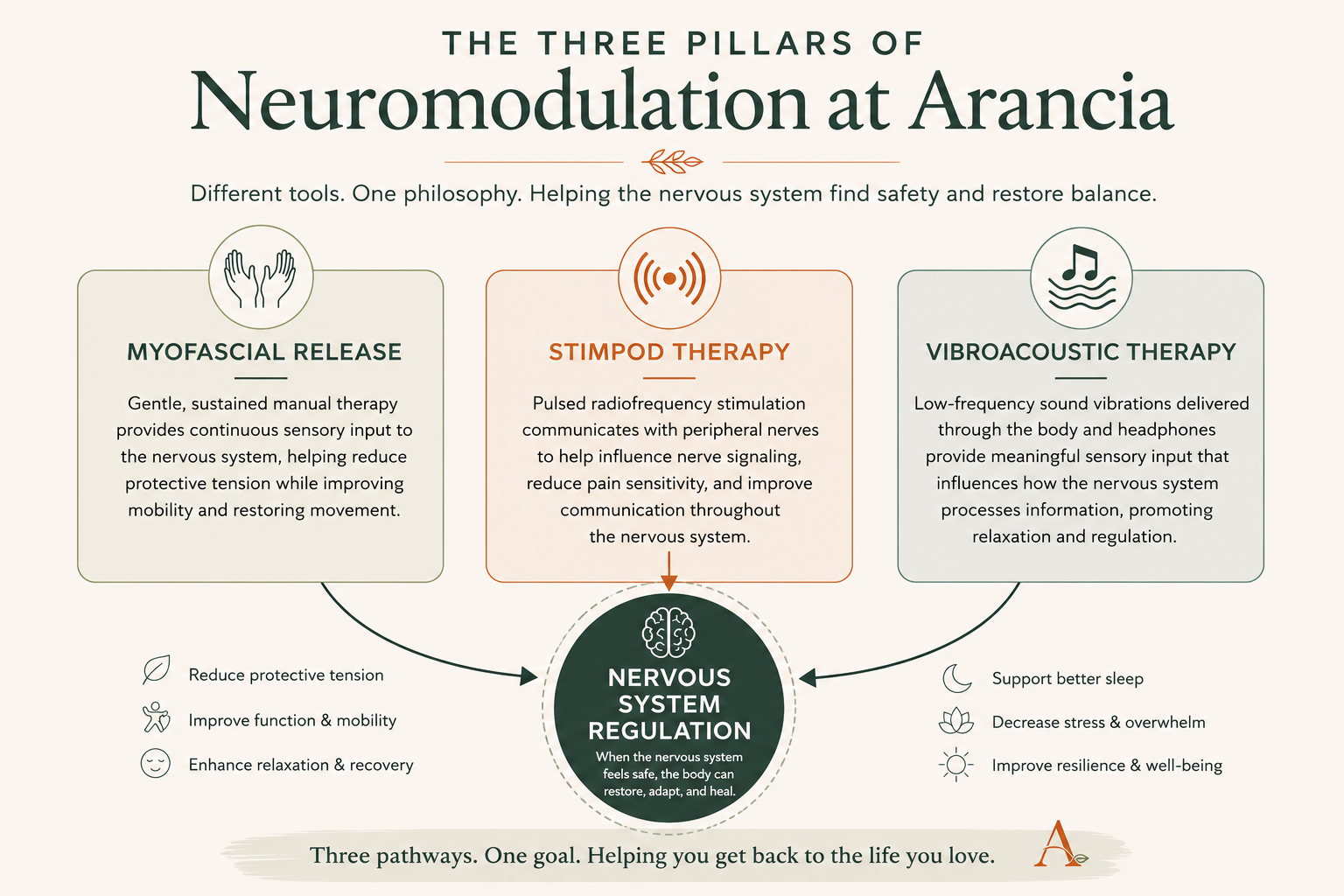
The Three Pillars of Neuromodulation at Arancia
One of the things that makes our clinic unique is that we don't rely on just one treatment approach. Different patients need different types of input, and sometimes combining therapies produces the best results.
Myofascial Release
Our hands provide gentle, sustained pressure to areas of restriction within the fascial system.
While many people think of myofascial release as simply "working on tight muscles," it's much more than that. Gentle manual therapy provides continuous sensory information to the nervous system, helping reduce protective guarding while improving mobility and restoring movement.
StimPod Therapy
StimPod uses pulsed radiofrequency stimulation to communicate directly with peripheral nerves.
By providing targeted stimulation, StimPod helps influence nerve signaling and supports healthier communication between the nervous system and the body. Many patients experience improvements in pain, muscle function, and nervous system regulation as part of a comprehensive treatment plan.
Vibroacoustic Therapy
Vibroacoustic Therapy introduces another form of neuromodulation.
Through carefully selected low-frequency sound vibrations delivered both through a specialized sound bed and headphones, the body receives gentle mechanical stimulation while the brain simultaneously processes therapeutic sound. This combined sensory experience influences how the nervous system receives and processes information, supporting relaxation and healthy nervous system activity. Research and clinical use suggest vibroacoustic therapy may be viewed as a form of neuromodulation because of its effects on nervous system communication and neuroplasticity.
Although each treatment works differently, they all share the same purpose:
Helping the nervous system recognize safety so the body can function more efficiently.
So... What Exactly Is Vibroacoustic Therapy?
Imagine lying comfortably while gentle vibrations move throughout your body in sync with specially designed therapeutic sound.
Unlike simply listening to relaxing music, Vibroacoustic Therapy allows you to feel the sound as well.
Specialized transducers within the treatment bed deliver low-frequency vibrations to areas such as the back, neck, and legs while therapeutic audio is delivered through headphones. Together, these inputs stimulate both the body's tactile system and auditory system, creating an immersive experience that provides meaningful sensory information to the brain.
As your brain processes these signals, the nervous system has an opportunity to shift away from a protective, high-alert state toward one that supports relaxation, recovery, and healing.
Why Does This Matter?
Many chronic conditions involve more than muscles or joints alone.
When the nervous system remains in a constant state of protection, it may contribute to:
Bladder urgency and frequency
Muscle tension
Persistent neck and back pain
Stress-related symptoms
Difficulty sleeping
Feeling "stuck" despite previous treatments
For many people, the goal isn't simply reducing pain.
It's helping the body feel safe enough to stop creating unnecessary tension.
Vibroacoustic Therapy provides another gentle way to support that process.
The Brain Loves Rhythm
One fascinating aspect of Vibroacoustic Therapy is the relationship between sound frequencies and brain activity.
Our brains naturally produce different patterns of electrical activity associated with focus, relaxation, meditation, and sleep. Vibroacoustic Therapy uses carefully designed sound programs intended to support these naturally occurring brain states, promoting calmness, relaxation, or improved focus depending on the program selected.
Many patients describe feeling deeply relaxed during treatment, while others notice improvements in their ability to unwind, recover after stressful days, or prepare for more restorative sleep.
Why We Believe Vibroacoustic Therapy Fits So Well at Arancia
At Arancia, we don't believe healing comes from a single technique.
We believe healing happens when we help the body and nervous system work together again.
Every treatment we offer serves a purpose:
Myofascial Release improves mobility and reduces fascial restrictions.
StimPod supports healthier nerve communication.
Vibroacoustic Therapy provides whole-body sensory input through therapeutic sound and vibration.
Different tools.
One philosophy.
Helping the nervous system become more adaptable, more resilient, and less protective.
Who May Benefit?
Vibroacoustic Therapy may be a valuable addition to care for individuals experiencing:
Persistent muscle tension
Stress and anxiety
Difficulty relaxing
Sleep challenges
Recovery after physical activity
Nervous system dysregulation
Because every patient is unique, Vibroacoustic Therapy is never viewed as a stand-alone solution. Instead, it becomes another tool we can integrate into your personalized treatment plan alongside hands-on therapy, movement, education, and neuromodulation techniques like StimPod.
Healing Isn't About Fighting Your Body
One of the biggest misconceptions about chronic pain is that your body is working against you.
More often, your body is trying to protect you.
Sometimes it simply becomes stuck in that protective response.
Our goal isn't to force your body to change.
It's to provide the right environment and the right inputs so your nervous system can begin responding differently.
That's why we're so excited to bring Vibroacoustic Therapy to Arancia Physical Therapy.
It's another way to help your nervous system feel safe, your body relax more deeply, and your recovery move forward.
Book a Phone Consult today to start your healing journey.