
The psoas muscle is a long, ribbon-shaped muscle in your lower back and it is one of the core muscles in your abdomen. Like all muscles, the psoas is made of tight fibers woven together. The fibers stretching and pressing together is what lets your psoas move your lower back, hips, and upper leg.
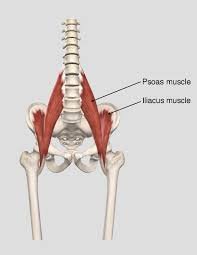
The psoas muscle links the spine to the lower body and connects the muscles deeper inside the body to ones closer to the surface of the skin. It is a bridge in the center of your body, connecting parts and helping you perform motions that use your abdomen and legs at the same time.
What Else Does Psoas Do?
The psoas is an incredible muscle that is utilized in daily life by:
Holding your lower back still while sitting
Pulling your abdomen up from a prone position (think sit-up)
Helping move and flex your hips when you are standing and lying down
Lifting your upper legs when walking and climbing stairs
Stabilizing the top of your femur (thigh bone) when moving the hips
How Do I Know If My Psoas is the Cause of My Discomfort?
The psoas can naturally tighten up when spending time in one position. When we sit or stand in one position for a prolonged time, blood flow to our muscles can decrease and cause feelings of aches and stiffness.
If your psoas is causing discomfort, you might be feeling:
Lower back pain that feels like a deep ache
Hip and groin pain
Stiffness in hips and lower back
Difficulty with movement such as climbing stairs or going from sitting to standing or standing upright
A catching or snapping sensation in the groin when bending the knee
Changes in posture
Back, pelvis, buttock, or groin pain
Catching or slipping that arises in the groin when flexing the knee at 90 degrees
Reduced range of motion
Shuffling or limping when walking
Myofascial Release and Your Psoas
There are many reasons that Myofascial Release can help alleviate any discomfort that may be caused by the psoas muscle.
Myofascial Release can:
Help relieve discomfort that may be caused by the psoas.
Decrease lower back pain
Improve spinal range of motion
Improve circulation
Calm the nervous system and release any physical tension being held. The psoas is linked to the “fight or flight or freeze” response.
Improve the joint alignment and reduce stress on the hips and knees.
Relieve digestive issues like bloat and constipation that may be caused by a tight psoas
The non-traumatic, gentle nature of Myofascial Release is reassuring in you do not have to worry, since MFR will not worsen symptoms.
Interested in releasing your psoas? Check our YouTube channel here.
Myofascial Release acts as a way to increase effectiveness and permanency of lasting results and relieving pain, restoring function, quantity of motion, and quality of life.